Comparisons
hx vs Federato: Comparing workbench and integrated platform approaches
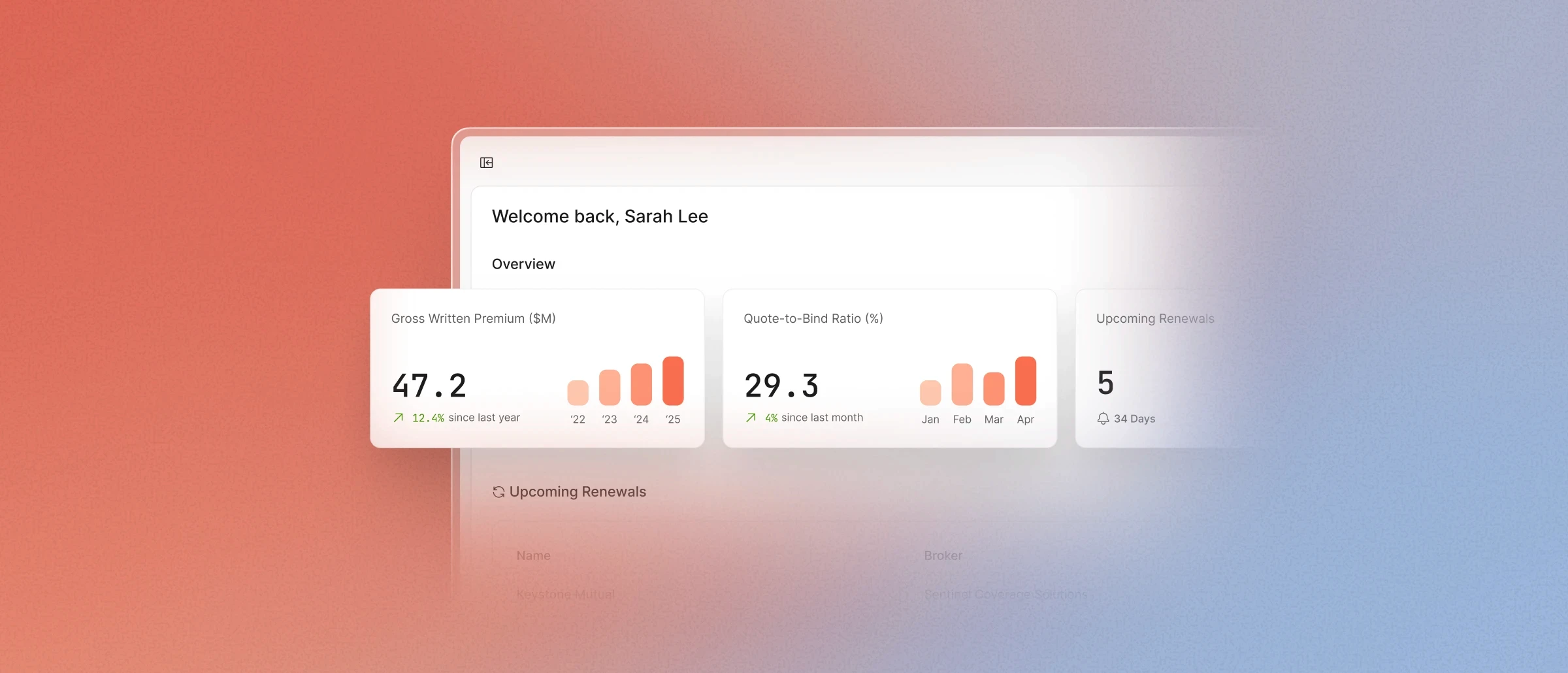
Compare Federato's underwriting workbench with hx's integrated platform. Learn which approach addresses your submission, pricing, and portfolio challenges.
hx vs Federato: comparing underwriting workbench and integrated platform approaches
For technology and underwriting leaders evaluating platform options, choosing between Federato and hx comes down to identifying your organisation's primary constraint. If underwriters waste hours toggling between systems and chasing submissions through disconnected inboxes, Federato's workbench capabilities address those operational bottlenecks directly. If improving underwriting decision-making through better pricing, risk assessment, and strategic execution is your priority, hx's integrated platform shapes loss ratios across your entire book. The platform handles submission intake and triage while providing underwriters with pricing guidance and strategic guardrails at the point of decision.
This comparison helps you determine which architectural approach aligns with your transformation priorities.
Where Federato excels: submission handling and triage
Federato's core strength lies in bringing order to the chaos of broker submissions, giving underwriting teams a single place to manage intake instead of juggling email, portals, and shared drives. According to Celent's analysis, Federato's Orchestrate platform enables carriers to create AI-powered underwriting workflows using natural language prompts, allowing non-technical users to automate complex, repetitive tasks without coding expertise.
The platform tackles the friction that slows quote turnaround for underwriters. Automatic extraction pulls data from PDFs, emails, and spreadsheets, eliminating the re-keying that consumes underwriter time. Submissions that fall outside appetite get flagged before an underwriter invests effort. Work routes to the right person based on authority level, expertise, and current workload, helping teams hit SLA targets on high-priority accounts.
Federato's no-code approach extends beyond submission handling. The Orchestrate product lets operations teams build agentic AI workflows without developer involvement, which appeals to carriers who want to automate routine decisioning quickly. The platform also tracks broker responsiveness and relationship patterns, giving underwriting managers visibility into which broker relationships drive the most productive submissions.
According to Federato's platform documentation, implementations achieve an 87% reduction in system toggling, which translates to underwriters spending less time navigating between tools and more time evaluating risk.
However, research from McKinsey draws an important distinction: dashboards that measure how fast submissions are processed differ from platforms that track whether those submissions become profitable business. Processing speed and loss ratios answer different questions for leadership.
Where hx excels: pricing intelligence and portfolio analytics
Where Federato focuses on submission handling and workflow routing (the nervous system of underwriting operations), hx addresses the decision layer that shapes loss ratios and profitable growth: deep risk-level underwriting insight, pricing accuracy, portfolio analytics to develop strategy, and guidance at the point of pricing and triage to execute it. Think of it as the brain that determines what decisions to make, while workbenches coordinate how work flows between people and systems.
hx provides submission-to-quote workflow within a single environment. The Ingestion Agent extracts data from broker submissions, triage ranks opportunities by expected profitability while surfacing appetite rules, and pricing models deliver rate guidance with strategic guardrails that help underwriters execute portfolio strategy on every risk.
For actuarial teams, the platform provides a code-based pricing environment where they can build, test, and deploy models without waiting for IT release cycles. Compliance and audit requirements are built into that environment from the start rather than bolted on later. This self-service capability addresses a common frustration for actuarial leaders: model development backlogs that stretch into months because every change requires IT involvement.
The triage capability ranks submissions by their likelihood of binding profitably. Instead of underwriters processing submissions in the order they arrived, they see which opportunities deserve attention based on expected margin.
For CUOs and portfolio managers, portfolio intelligence provides visibility into how individual bind/decline decisions shape the book's performance. Leadership can see how this quarter's underwriting activity will affect next quarter's loss ratios, track which segments or underwriters are driving results, and model the financial impact of strategy changes before implementation.
Pricing: external consumption versus native integration
Triage answers "should we quote this risk?" while pricing answers "at what rate?" The architectural differences between workbenches and integrated platforms shape how quickly underwriters move from one question to the next.
Federato operates primarily as a submission management and triage system. It captures broker data, structures it, and routes it according to configured rules. When pricing lives in a separate system, Federato hands off submission data through an integration, and underwriters wait for rate calculations to come back before they can quote. That handoff takes time and creates opportunities for data to get lost or reformatted incorrectly.
hx keeps submission data and pricing models in the same environment. When an underwriter opens a submission, they see an indicative price immediately because the data doesn't have to travel anywhere. For underwriting leaders focused on quote turnaround, this architectural difference affects how quickly teams can respond to brokers.
The architectural difference also shapes what triage can accomplish. Rule-based triage asks whether a submission fits the appetite based on characteristics like industry, geography, or limit size. Determining whether a submission will generate an acceptable margin requires running it through a pricing model, which happens downstream if pricing lives in a separate system.
Portfolio visibility: workflow metrics versus decision-to-outcome tracking
Thousands of bind/decline choices accumulate into a combined ratio over time. The question for leadership is whether the platform shows throughput or profitability.
Federato gives operations leaders visibility into how submissions flow through the system: how many came in, how fast they moved, where they're stuck, and whether teams are hitting SLA targets. These metrics matter for managing capacity, but they don't tell CUOs whether the business being written will be profitable.
hx tracks from submission through quote, capturing triage scores, risk assessments, and technical prices along the way. This data helps actuaries understand how underwriters use models and supports re-rating when testing model changes. The difference is between knowing you processed 500 submissions this week and understanding how those submissions were assessed and priced.
Model improvement: static data versus continuous learning
Every submission contains signals that could sharpen the next pricing model, if the architecture captures them. According to insurance analytics research, patterns across thousands of submissions and outcomes improve pricing accuracy through continuous model refinement.
Federato captures submission data and consolidates it from multiple sources into a unified view for underwriting workflows. However, if pricing models live elsewhere, getting that data back to actuarial teams requires building and maintaining a separate integration that many carriers underestimate.
hx keeps everything in one place: what the submission looked like, how it was priced, what the underwriter decided, and how the policy performed. Actuaries refine models using actual results because the platform already contains both the inputs and outcomes they need. For actuarial leaders frustrated by the disconnect between underwriting data and model development, this closed loop addresses a persistent pain point.
According to actuarial governance standards, carriers face real risk when the connection between underwriting decisions and actuarial models depends on manual processes or doesn't exist at all. Without that feedback loop, pricing drifts from reality, and leadership doesn't find out until the loss ratio tells them.
Integration ecosystem and deployment considerations
The transformation being pursued shapes integration requirements. Workflow optimisation layers onto existing systems; pricing transformation may replace core components of how rates are calculated.
Federato connects to existing pricing systems, meaning carriers keep their current rating tools and add Federato's workflow layer on top. IT teams configure and maintain the integrations that move data between systems. For CTOs evaluating deployment complexity, this approach preserves existing investments but adds integration maintenance to the ongoing workload.
hx provides connectors to core platforms, including Guidewire, and supports synchronisation with data platforms like Snowflake and Databricks. For carriers replacing legacy pricing infrastructure, hx serves as the pricing system rather than connecting to an external one. This approach requires more upfront transformation but reduces long-term integration complexity.
Workflow-focused implementations typically involve operations and IT teams setting up routing rules and system connections. Pricing transformation requires actuarial involvement because actuaries will own the models going forward, and they need to validate that the migration preserves pricing logic. CTOs should factor these different stakeholder requirements into implementation planning.
Neither vendor publishes standard implementation timelines, and actual deployment duration varies based on complexity and how much legacy infrastructure needs accommodation. Reference customers with similar setups can provide more realistic expectations during evaluation.
Use cases: matching platform to organisational needs
The primary constraint determines which platform delivers value. The indicators below help leadership diagnose whether workflow friction or pricing limitations represent the binding constraint.
When Federato addresses the primary constraint:
If pricing infrastructure works well but submission handling is fragmented, focused workflow optimisation delivers the most value. Look for these indicators: underwriters toggling between multiple systems to process submissions, inconsistent routing leading to SLA breaches or missed opportunities, and limited visibility into where submissions stand in the process. In these situations, pricing accuracy may be acceptable while operational friction limits how much business teams can handle.
Federato's workflow automation and unified submission interface address these bottlenecks directly. This approach works well when pricing and policy administration systems already meet organisational needs and don't require replacement.
When hx addresses the primary constraint:
If pricing accuracy and portfolio visibility limit profitability, workflow optimisation alone won't solve the problem. The constraint isn't how fast submissions move through the system; it's whether pricing reflects actual risk and whether leadership can see how underwriting decisions affect financial outcomes.
Look for these indicators: quote-to-bind ratios suggesting uncompetitive or misaligned pricing, actuarial model development backlogs measured in months, Excel-based pricing models that lack version control or audit capabilities, and limited visibility into how underwriting decisions affect portfolio performance over time.
hx addresses these constraints by giving actuaries a Python-based environment to build, test, and deploy models without IT dependency, while connecting pricing outputs directly to portfolio analytics. Underwriters see indicative prices at submission, and actuarial leaders see how bind/decline decisions shape loss ratios over time.
According to Deloitte's insurance outlook, carriers with legacy pricing infrastructure face systematic risks as market conditions change faster than their models can adapt.
When hybrid architectures make sense:
Carriers with existing workflow tooling sometimes ask whether they need to replace everything. For task organisation and assignment routing, existing tools may continue to serve. For submission ingestion, triage, pricing, and portfolio intelligence, hx provides these capabilities within a single environment where data flows directly from intake into pricing models and analysis. This direct connection creates a feedback loop that fragmented tooling cannot replicate.
Strategic considerations for platform selection
The choice between underwriting workbenches and integrated platforms reflects different strategic priorities rather than simple feature comparisons. Workbenches excel at solving workflow efficiency challenges when adequate pricing infrastructure exists. Integrated platforms become essential when pricing accuracy, model governance, and portfolio profitability drive transformation requirements.
Success depends on honest assessment of organisational constraints and objectives. Is the goal to process more submissions efficiently, or to make better pricing decisions consistently? The answer to that question determines which architectural approach delivers sustainable value for the business.
How hx connects intake, pricing, and portfolio outcomes
For carriers where pricing accuracy and portfolio visibility are the primary constraints, hx provides a decision intelligence platform that brings submission handling, pricing, and portfolio management into one environment.
The platform extracts broker data from Excel spreadsheets, PDF documents, Word files, email content, and images. It maps that data to pricing model inputs automatically, so underwriters don't re-key information, and every quote starts from consistent data.
The pricing environment uses Python as its native language, giving actuaries access to libraries that handle calculations that Excel can't, such as aggregating a portfolio with hundreds of thousands of policies. This pro-code approach means actuaries work in a language they can Google, hire for, and extend without vendor dependency. Models deploy with version control and full audit history, so actuaries can update pricing logic without waiting for IT to release changes.
The decision engine at the platform's core connects every stage of the underwriting workflow. Submission data flows directly into pricing models, pricing outputs inform triage decisions, and bind/decline outcomes feed back into portfolio analytics. This closed loop means actuaries refine models using actual results rather than waiting for quarterly reports.
Portfolio intelligence shows leadership the full picture: which quotes bound, how policies are performing, where exposure is accumulating, and how results vary by segment, underwriter, or line of business. CUOs can model strategy changes against the current book before implementation.
According to Aviva's implementation, this integrated approach enabled delivery of 20 pricing models in 9 months and reduced policy creation time from over an hour to 5-10 minutes.
FAQ
Can Federato and hx work together? The two platforms can work together through integration, with Federato handling submission routing and workflow management while hx provides pricing calculations and portfolio analytics.
Does Federato include pricing capabilities? Federato focuses on submission management and workflow routing, so separate solutions are needed for rate calculations and actuarial model governance.
Does hx replace underwriting workbenches? It depends on organisational needs. hx provides pricing and decision intelligence that workbenches can display to underwriters. Some carriers use both platforms, while others deploy hx for ingestion, triage, and pre-quote decision support.
How should leadership choose between approaches? Identify the primary constraint. When submission volume and routing consistency create the main friction points, workbenches address those challenges directly. When pricing accuracy, model governance, or portfolio visibility limit profitability, integrated platforms become necessary.
Which roles need to be involved in the evaluation? Workflow-focused evaluations typically involve operations leaders and IT. Pricing transformation evaluations require actuarial leadership involvement because actuaries will own the models going forward.